In this article, we break down key considerations, best practices, and practical tips to help businesses make informed decisions about their office technology and communication systems.
Your Front Desk Closes at 5PM. Your Customers Don’t.
A customer finds your business online at 8:43PM.
Maybe they found you through Google. Maybe they saw a Facebook ad. Maybe a friend recommended you earlier in the day and they finally remembered to call after putting the kids to bed.
They’re ready to book. Ready to ask questions. Ready to become a customer.
So they call.
And nobody answers.
The call goes to voicemail.
Most business owners assume the customer will leave a message and call back later.
The reality is, most people don’t.
Today’s customers expect instant responses. If they can’t get help quickly, they move on to the next business that answers the phone. It’s not personal. It’s just how people shop now.
For small businesses, this creates a huge problem.
You spend money on advertising, SEO, social media, websites, and referrals designed to make the phone ring. But when calls come in after-hours, during lunch breaks, while employees are helping another customer, or during busy times of the day, many of those opportunities disappear before your team even realizes they existed.
That’s where AI receptionists are changing the game for small businesses.
What Happens When Businesses Miss Calls?
Most small businesses are not intentionally ignoring customers. The reality is simply that nobody can answer the phone 24/7.
A law office may be helping clients in meetings all afternoon.
A plumbing company may have technicians out on jobs.
A dental office may close at 5PM even though patients are searching online at 9PM.
A salon may be fully booked during the day and unable to answer every incoming call.
The problem is that customers rarely wait around anymore.
Studies consistently show that many callers will not leave a voicemail, especially if they are contacting a business for the first time. People want immediate answers. If they don’t get them, they move on quickly.
For many businesses, missed calls directly equal missed revenue.
Imagine a business receives 100 calls per month.
If 30% of those calls go unanswered after-hours or during busy periods, that’s 30 missed opportunities.
If even half of those callers choose another company instead of calling back, that could mean 15 lost customers every single month.
Now multiply that by the average value of a customer.
The numbers add up fast.
Why Traditional Solutions Often Fall Short
Most businesses already know missed calls are a problem. The issue is that traditional solutions can be expensive, inconsistent, or difficult to manage.
Common approaches include:
- Hiring a full-time receptionist
- Forwarding calls to personal cell phones
- Using voicemail systems
- Having employees multitask while answering phones
- Letting calls roll over after-hours
The problem is that each option comes with tradeoffs.
Hiring additional staff can cost thousands every month after payroll, taxes, training, and benefits.
Forwarding calls to employees often leads to burnout and poor work-life balance.
Voicemail sounds professional in theory, but many customers hang up the second they hear it.
Even businesses with great front desk employees still struggle to answer every call during peak hours.
This becomes especially difficult for growing businesses where employees are already juggling multiple responsibilities.
What an AI Receptionist Actually Does
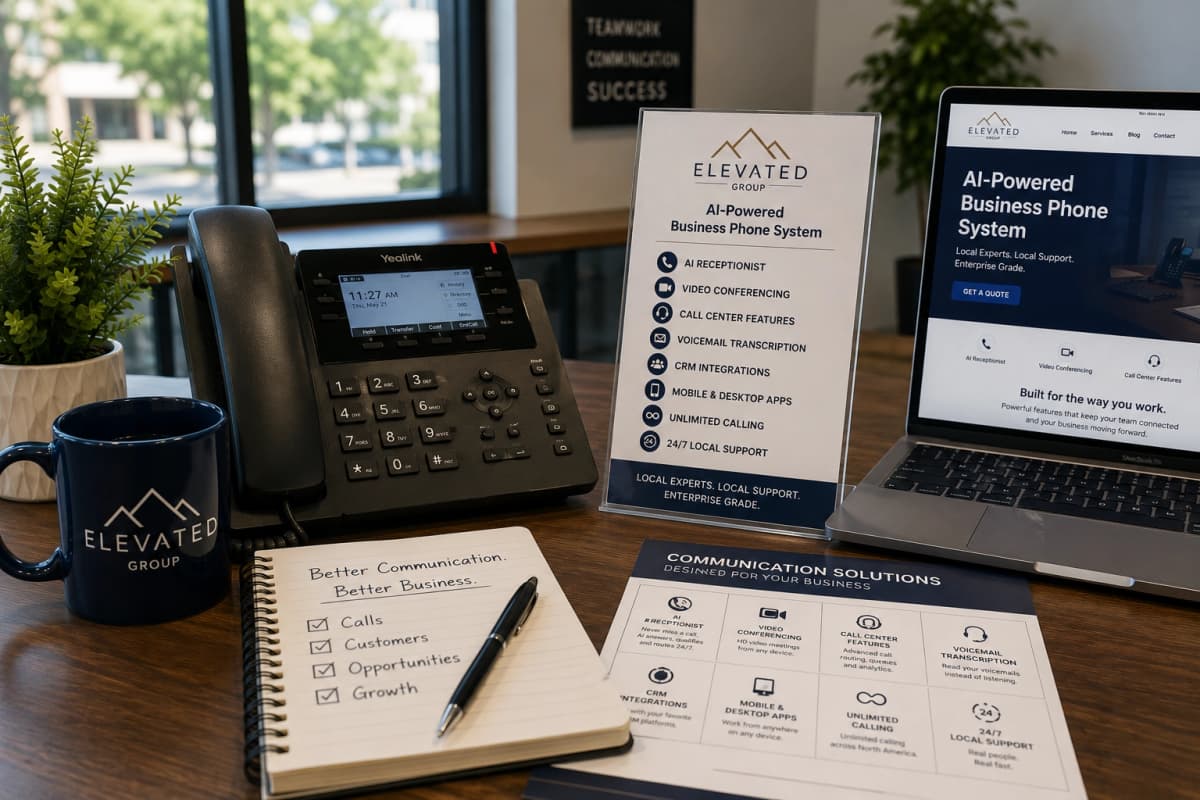
An AI receptionist is designed to make sure your business never misses important customer conversations.
Instead of calls going unanswered, the AI receptionist answers immediately, speaks naturally with callers, and helps guide them through the next step.
Depending on your business, an AI receptionist can:
- Answer calls 24/7
- Book appointments directly into your calendar
- Answer common customer questions
- Route urgent calls to the correct person
- Capture lead information
- Send notifications instantly
- Handle overflow calls during busy times
- Support after-hours customer inquiries
- Transfer calls when needed
- Provide basic information about services, hours, or locations
The goal is not to replace every employee inside your business.
The goal is to make sure opportunities are not slipping through the cracks simply because nobody was available to answer the phone.
For many businesses, the AI receptionist works best alongside existing employees by handling repetitive or after-hours conversations while staff focuses on more important in-person tasks.
Can AI Receptionists Actually Sound Human? This is one of the first questions almost every business owner asks.
And honestly, it’s a fair concern.
Nobody wants customers stuck talking to a frustrating robotic system that feels impossible to navigate.
Modern AI receptionists are very different from the old automated phone systems people are used to.
Instead of endless “press 1 for this” menus, today’s AI systems are conversational and designed to sound natural, helpful, and professional.
Customers are greeted instantly, guided through questions, and connected to the information they need quickly.
For many callers, the biggest thing they notice is simply that someone answered right away.
Why Small Businesses Are Starting to Adopt AI Receptionists
The businesses adopting AI receptionists right now are not giant tech companies.
They’re local businesses.
Industries seeing major benefits include:
- Dental offices
- Law firms
- HVAC companies
- Salons and spas
- Medical practices
- Real estate teams
- Contractors
- Home service businesses
- Fitness studios
- Property management companies
Businesses that rely heavily on phone calls to generate revenue are realizing they can no longer afford to miss opportunities simply because their team is unavailable for a few hours each day.
Many businesses are also struggling with staffing challenges and rising payroll costs. Hiring additional front desk employees is not always realistic, especially for small or growing companies.
An AI receptionist gives businesses a way to improve responsiveness without dramatically increasing overhead.
How Much Does an AI Receptionist Cost? One of the biggest misconceptions is that AI receptionists are only for large companies with massive budgets.
In reality, many businesses can get started for around $100 per month depending on call volume and setup needs.
Compared to the cost of losing customers every month due to missed calls, the return on investment can become obvious very quickly.
Even capturing a handful of additional appointments or leads each month may completely cover the cost.
The Future of Customer Communication
Customer expectations have changed.
People want:
- Immediate responses
- Convenience
- Businesses that are easy to reach
- Faster scheduling
- Better communication
- Less waiting and fewer callbacks
The companies that respond fastest are often the ones that win the customer.
An AI receptionist helps businesses stay responsive even when employees are unavailable, offices are closed, or phones are ringing nonstop during busy periods.
It’s not about replacing human interaction.
It’s about making sure your business never misses the chance to start the conversation.
If your business depends on incoming calls, every missed call matters.
And in today’s market, responsiveness can be the difference between growth and lost revenue.